
New employees should have their equipment and access from day one, and people who leave should keep none. The People module coordinates HR and IT on every hire, exit and role change.
What it is and how it helps
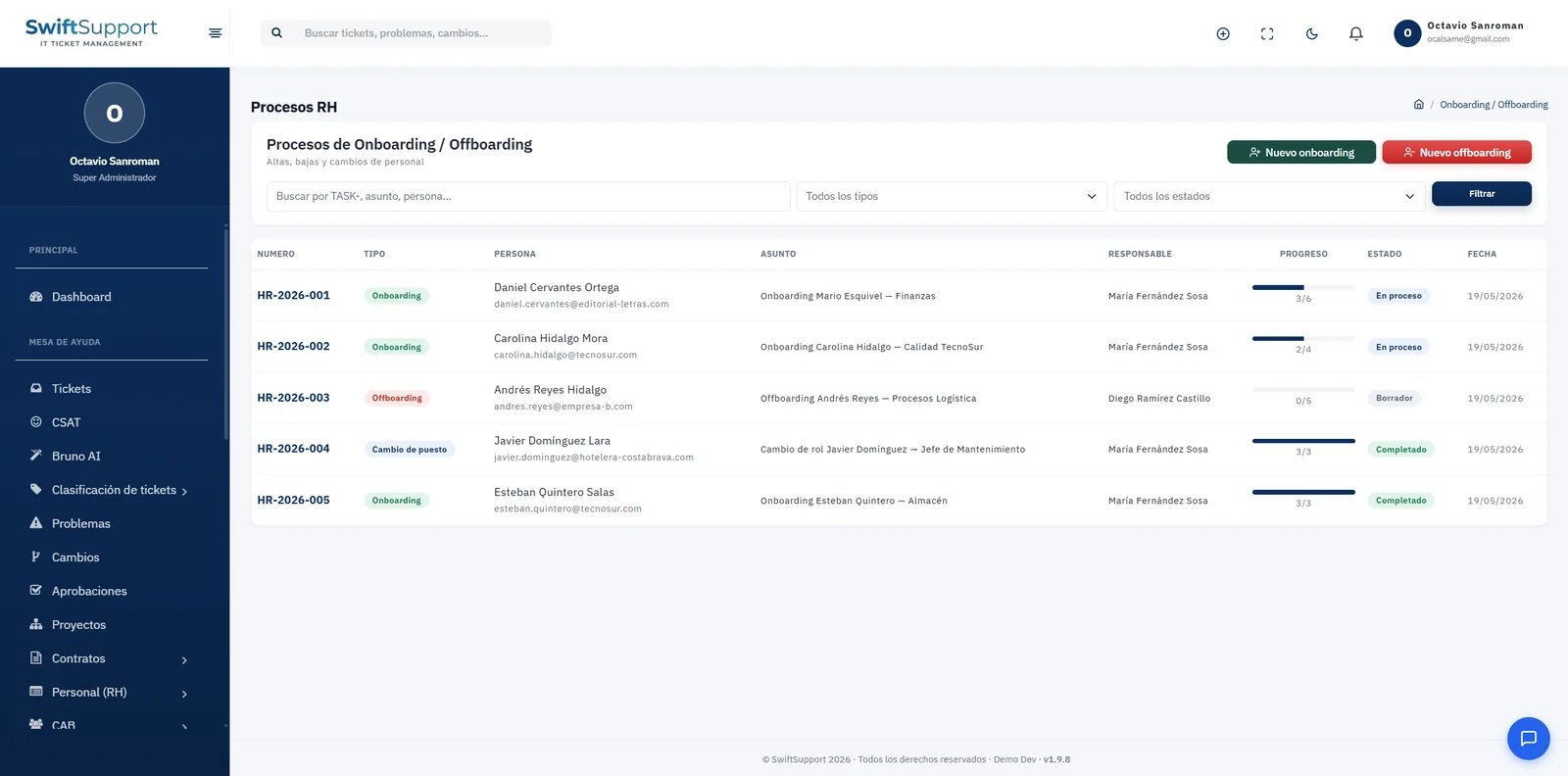
Staff movements are one of the most common sources of pending work and risk for IT: accounts not created on time, equipment never collected, access still active months after someone left. Swift Support turns every movement into a process with an ID (for example, HR-2026-001) and a task list.
There are three process types: onboarding (a new hire), offboarding (an exit) and role change. Each one records the person, subject, owner, progress (completed tasks out of the total), status —draft, in progress or completed— and date. The list can be filtered by type and status and searched by ID, subject or person.
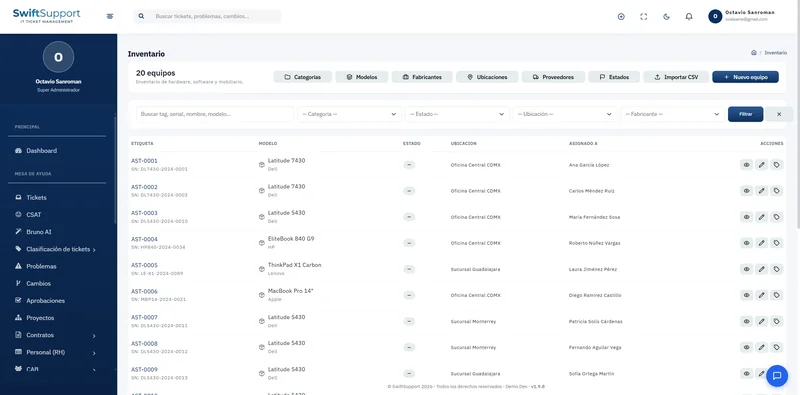
The corporate applications catalog defines which systems can be granted or revoked in each process, and equipment agreement templates document the terms of use for the equipment handed over, by country. Together with the inventory, the result is a clear record of what each person received and returned.
Key capabilities
Onboarding
New hires with every IT and HR task.
Offboarding
Orderly exits: access removal and equipment recovery.
Role change
Adjust access and equipment when someone changes roles.
Tasks and progress
Each process shows how many tasks are complete.
Corporate applications
A catalog of systems granted or revoked in each process.
Equipment agreements
Equipment terms-of-use templates by country.
Filters and search
By type, status, ID, subject or person.
How it works
-
01
HR starts the process
Creates a new onboarding, offboarding or role change.
-
02
Tasks are generated
Access, equipment, accounts and agreements are organized as tasks with owners.
-
03
IT executes
Each area completes its tasks; progress updates in real time.
-
04
The record is closed
With every task complete, the process moves to completed.